Colour Mixing: The method of mixing two or more colors together to create a new color is called color mixing. There are two main types of color mixing:
1. Add Color Mix (RGB)
Additive mixing is also known as color light mixing. The three primary colors of additive mixing are red (bright red), green, and purple, and the three intermediate colors are red (magenta), yellow, and blue. The mixing of the three primary colors of light into white light is called additive mixing.
2. Subtractive blending (CMYK)
Subtraction mixing refers to the mixing of material colors. Subtraction mixing can be divided into two types: direct mixing of pigments and overlapping mixing of transparent pigments. The characteristic of pigment mixing is opposite to that of additive mixing. The mixed color has a decrease in brightness and purity, and the more components mixed, the lower its brightness.
(1) The three primary colors of pigment mixture are red, yellow, and blue. The orange, green, and purple mixed with the three primary colors are subtractive colors, resulting in a gray black color.

Color Comparison Table in SIX Main Colours
(2) When transparent colors overlap with each other, the resulting new color is called overlapping color. Due to the overlap, the transmittance decreases, and the transparency decreases. The resulting new color will inevitably have a darker brightness, and the stacked new color often leans towards the upper color rather than the middle value of the two colors.
The Mechanical Mixing Method of Pigments, it is a terminology of chemical engineering.
The mechanical mixing method of pigments refers to the process of mechanically mixing two or more pigments with different colors in an appropriate proportion to produce a new color pigment, utilizing the mixability of pigments, that is, the surface compatibility of pigment particles. It is iron oxide brown (iron oxide red+iron oxide yellow+iron oxide black or iron oxide red+iron oxide black), chromium green (cherry grass chromium yellow plus ferric oxide blue), and phthalocyanine chromium green
Color is the most beautiful and amazing experience in human senses. In our daily lives, color is everywhere, bringing us endless beauty and inspiration. And our common pigments are also composed of multiple colors, presenting us with a rich and colorful world of colors.
In the Production Process of Pigments, single color iron oxide pigments are very common, including colors such as iron oxide red, iron oxide yellow, and iron oxide black. However, in practical applications, we often need more diverse and diverse colors, so we need to cross match multiple pigments to generate new pigment specifications.
For example, iron oxide orange is a mixture of iron oxide red and iron oxide yellow. It is not only brightly colored, but also has a certain degree of transparency, and has been widely used in fields such as architecture and coatings; Iron oxide purple can be mixed with iron oxide red and ultramarine blue, which not only has a beautiful color, but also has a certain degree of covering and strength, and has a wide range of applications in various fields.

Dilution Colour Comparison Iron Oxide Orange, Oxide Yellow, Oxide Red
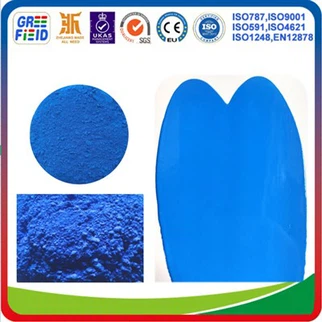
In addition, we can also create more unique and diverse colors by mixing various basic pigments. For example, iron oxide green is formed by the mutual adsorption and mixing of iron oxide yellow and complex phthalocyanine green liquid phase with related chemical additives, and its color is bright and soft, making it very suitable for application in the manufacturing of cosmetics and beauty products; Iron oxide blue is a combination of iron oxide yellow and phthalocyanine blue in liquid phase and related chemical additives that adsorb and mix with each other. Its color is beautiful and pure, and it is widely used in fields such as paints and pigments.

UltramarineBlue vs Compound Purple Violet vs Iron Oxide Red
From the practical application of cross matching of these pigments, we can find that this method can not only create more diverse and beautiful colors, but also produce richer and more complex color effects, thus meeting the diverse applications in different fields and needs. In the future development, the cross matching methods of pigments will be further improved and innovated, presenting us with a more colorful color world.
Warmly welcome customers from all over the world to inquire about the Modulation services and product OEM services of various oxide pigment products, and explore deep cooperation in technical and commercial aspects, such as OEM, ODM, quality replication, packaging, brand printing, OEM production, etc. We will always pay attention to product quality control and market demand changes, continuously improve pigment quality, win the market through innovation, steadily develop, and work together to win the future.
Welcome to inquiry our Iron Oxide Pigments , Micronized Pigments and Project Materials by email: Vip@Greefield.com or by WhatsAPP:+86139 5726 4669 smoothly , the TDS request through WhatsAPP .